Working in the three-phase oil immersed transformer supply industry, I’ve spent more than a decade walking through factories, troubleshooting field issues, and sitting in on maintenance meetings with industrial plant operators who swear by the reliability of these workhorses—until an unplanned external short circuit hits their system. That’s when I hear the same frustrated question: “How could a fault that happens outside my transformer break something this robust?” It’s a fair question. For years, we design these units to survive far more stress than they’ll see in normal operation, but external short circuits are one of the few events that can push even a well-built oil immersed transformer past its safe limits. Let me break down exactly how that happens, what it does to different parts of the unit, and what operators can do to protect their investment. Three Phase Oil Immersed Transformer
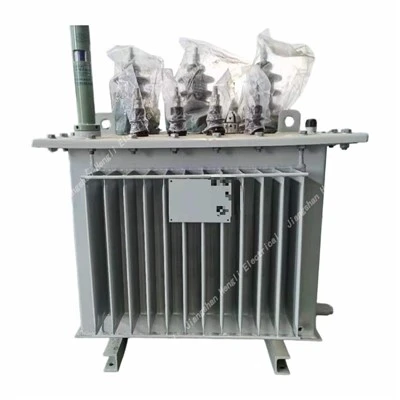
First, it helps to ground ourselves in what a normal operating scenario looks like for a three-phase oil immersed transformer. If you’ve ever stood next to one during start-up, you’ve felt the low, steady hum—that’s the magnetic field generated when current flows through the primary winding, transferring power to the secondary side. Under ideal load, that current is balanced across all three phases, the magnetic forces between windings are mild, and the mineral oil surrounding the core and windings does its job: cooling hot spots, insulating live parts, and absorbing small amounts of moisture to keep the unit running clean. Now, add an external short circuit—say, a loose connection on a downstream distribution line, a lightning strike that bypasses your protection gear, or a damaged cable that touches both phase conductors. Suddenly, that balanced current flows go off the rails. The fault current (the current that surges during a short) can be 10 to 20 times the transformer’s rated full-load current, and it peaks in milliseconds. That’s where the damage starts.
Let’s start with the windings, the beating heart of any transformer. Three-phase units have three separate windings (one per phase) wrapped tightly around the core, held in place with heavy clamping systems designed to handle minor expansion and vibration. That massive fault current creates an enormous magnetic force between adjacent windings—Lorentz force, for anyone who’s brushed up on basic electromagnetism. Unlike the mild push of normal load, a short circuit can generate forces strong enough to bend winding copper bars, warp insulation, or even shift entire winding sections. I remember a call from a food processing plant last year; their transformer tripped for an external short, and when our service team opened it up, one secondary phase winding had shifted nearly half an inch, enough to scrape against the core’s insulating paper lining. The unit didn’t fail immediately, but a month later, it shorted internally, taking their entire processing line down during a weekend shift. That’s the kind of avoidable pain we see all too often. Even more insidious, the heat from that fault current isn’t just noticeable—it’s sustained. Mineral oil is a good coolant, but it can only transfer so much heat before it breaks down. A 10x full-load current surge can push winding temperatures 200 to 300 degrees Celsius above normal operating levels, which is enough to char insulation, weaken winding varnish, and create tiny hot spots that turn into full-blown insulation failure over time.
Next, the core and clamping systems—often the unsung defenders of transformer integrity. The core is made of stacked, thin silicon steel laminations, held tight by steel clamps at the top and bottom of the tank. Those clamps and the tie bars that hold them in place are sized for normal vibration, but fault force puts them under a huge, sudden load. I’ve seen units where tie bars bent so badly during a short that the top core laminate separated from the stack, causing a persistent, loud hum that operators mistook for a loose part in their piping system for months. Even if the metal parts don’t bend, the repeated stress of fault forces can cause fatigue over years—something we call “mechanical fatigue” in the industry. A transformer might survive one short, but three or four over its lifespan can weaken clamps enough that the next surge pushes it over the edge. The laminations themselves aren’t immune, either. The high heat from the fault can damage the thin insulating coating between each lamination, increasing core losses and making the unit run hotter than normal. Over time, that extra heat accelerates oil degradation, creating a vicious cycle of poor performance from the core and faster wear.
Then there’s the oil and the tank—the outer shell that keeps everything sealed and protected. Most people know mineral oil is for cooling, but it’s also a primary insulator between live parts and the grounded tank. A large external short circuit creates arcing in the windings, and that arc sends a shockwave through the oil. I’ve opened tanks after a major short and found oil with tiny carbonized particles floating in it—those are from arcing, and they’re a problem. Over time, those particles act as conductive pathways, breaking down the oil’s dielectric strength and making future faults more likely. Worse, the pressure from that arc and the sudden heat can make the tank bulge or dent. Wait, you might think: a steel tank is heavy, it can handle a little pressure. But modern three-phase oil immersed transformers use lightweight steel to cut installation costs, and even a small dent can warp the tank’s internal seals, allowing moisture or dust to get in. I once worked with a mining company that skipped installing surge protection on a 2 MVA transformer; a short circuit caused a 2-inch dent in the tank, and over six months, that dent let in enough moisture to cause a phase-to-phase short, shutting down their conveyor system during a peak harvest. The tank’s sealing gaskets also take a hit—sudden temperature spikes from the fault can harden or crack rubber gaskets, leading to oil leaks over time. A small leak might seem trivial, but once oil drops below a critical level, the windings overheat, and that’s a total unit failure.
Now, let’s be clear: this isn’t a death sentence for every transformer that sees an external short. The key factors here are how the transformer was built, how large the fault current was, and how quickly the protection system cut power. At our supply company, we design every three-phase oil immersed transformer with fault tolerance in mind: heavier clamping systems, high-temperature insulation rated for short-term overloads, and oil with higher dielectric strength to handle arcing. But even the best design can only do so much if an operator’s protection gear is outdated. For example, a transformer with a 25 kA short-circuit withstand rating will handle a fault up to 25 kA without damage, but if the upstream breaker takes 2 seconds to trip (instead of the recommended 0.1 seconds for faults), the heat and force build up enough to cause damage. We also see a lot of operators skip regular testing of their transformers’ short-circuit capabilities, assuming they’ll last forever. A quick dielectric test or a winding resistance check every couple of years can catch early signs of winding shift or insulation damage before it becomes a full failure.
Here’s the thing I tell every customer who asks about this: external short circuits aren’t a matter of “if,” they’re a matter of “when.” Industrial systems, commercial buildings, even residential areas have points where a faulty connection, animal contact, or weather event will create a short. The difference between a transformer that bounces back and one that fails prematurely comes down to two things: choosing a transformer built to handle the expected fault current at your site, and having a proper protection system (breakers, fuses, surge arresters) that trips fast when a fault hits. I’ve worked with customers who bought cheap transformers that only had a 10 kA fault rating, and within three years, they’d had three short-circuit events, each shortening the unit’s life by an estimated 5 years. On the flip side, a food processing plant we supplied with a premium three-phase oil immersed transformer with a 30 kA fault rating and a modern protection system went through a major fault last year, and the unit ran without issue—they only had to replace a small surge arrester, not the whole transformer.
If you’re reading this and nodding along because you’ve dealt with a transformer failure after a short, or you’re looking to upgrade your system to avoid that headache, let me share a quick checklist of what to look for. First, check your transformer’s short-circuit withstand rating—this is a spec that tells you how much fault current it can handle without permanent damage. It should match or exceed the maximum fault current at your distribution point. Second, make sure your upstream protection gear is rated to trip in less than 0.2 seconds for short-circuit events; slower tripping means more heat and force. Third, schedule annual oil and winding tests, especially if your site has a history of short-circuit events. And finally, when you’re sourcing a new three-phase oil immersed transformer, don’t just go for the lowest price. Ask about the clamping systems, insulation ratings, and fault testing that the unit went through at the factory. A few extra dollars up front will save you from downtime and replacement costs later.
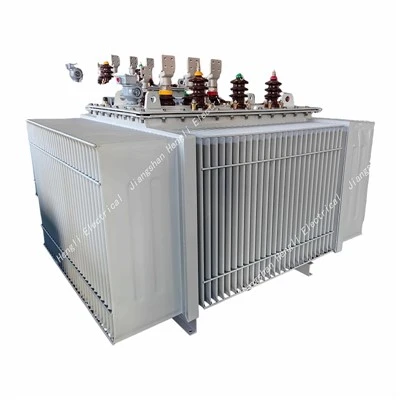
I’ve spent 12 years in this industry, and the most common regret I hear from customers is choosing a transformer that was underbuilt for the demands of their site. External short circuits are a fact of life for any power system, but they don’t have to be a death sentence for your transformer. The key is understanding how these events impact different parts of the unit, working with a supplier who designs for real-world conditions, and staying on top of maintenance. If you’re looking to upgrade your existing three-phase oil immersed transformer, or you need help sizing a new unit that can handle your site’s fault conditions, don’t hesitate to reach out. We’ve helped hundreds of industrial, commercial, and utility customers navigate short-circuit risks, and we’d be happy to work with you to find a solution that fits your needs.
Electric Furnace Transformer References
ANSI/IEEE C57.12.00, Standard General Requirements for Liquid-Immersed Distribution, Power, and Regulating Transformers
IEC 60076-5, Power Transformers – Part 5: Ability to Withstand Short Circuit
Transformer Design and Application: A Practical Guide for Engineers, J. C. Das, 2018
Field Maintenance and Testing of Oil-Immersed Transformers, Electric Power Research Institute (EPRI), 2020
Zhejiang Jiangshan Hengli Electrical Co., Ltd.
Zhejiang Jiangshan Hengli Electrical Co., Ltd. is one of the most professional three phase oil immersed transformer manufacturers and suppliers in China, featured by quality products and low price. Please rest assured to wholesale cheap three phase oil immersed transformer in stock here and get pricelist from our factory. Customized orders are welcome.
Address: 212 Fuzhu Street Sidu Town, Jiangshan, Zhejiang, China
E-mail: henglijs@foxmail.com
WebSite: https://www.henlypower.com/
